About Our Conference
The International Conference on Global Criminology and Victimology (ICGCV), the flagship event of the ThinkJustice Foundation (TJF), is a pioneering platform that brings together scholars, practitioners, policymakers, and students from around the world to engage in critical discussions on crime, victimization, and justice systems. The idea for this conference emerged from a dialogue between Dr. Bhanu Prakash Nunna and Dr. Manikandan Soundararajan, who envisioned an inclusive and accessible space for criminology, victimology, and criminal justice students in India. Their mission was to establish a conference that not only upheld international standards but also created meaningful opportunities for students, academics, and professionals to exchange ideas, present research, and contribute to the advancement of these fields.
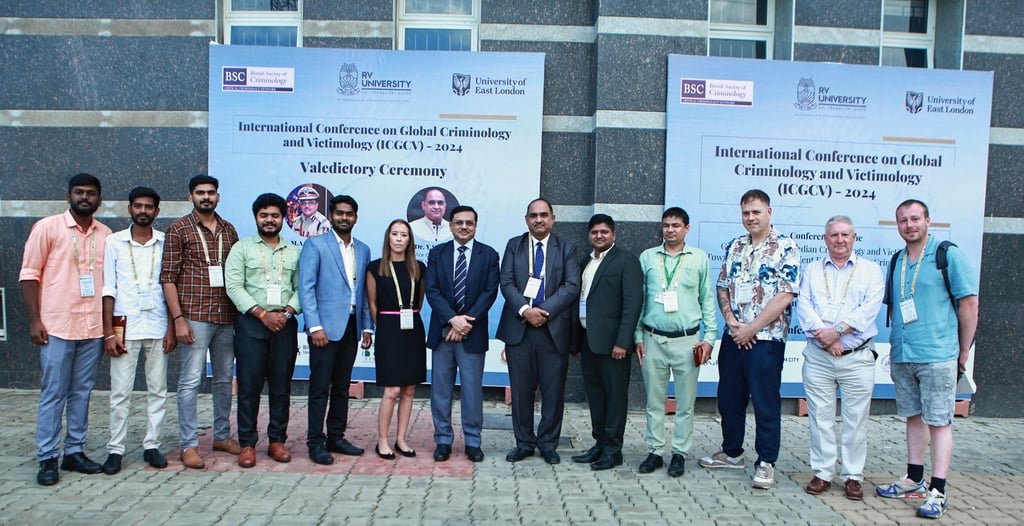
The first edition of ICGCV was organised in 2024 at RV University, Bengaluru, followed by the second edition in 2025 was organised by the National Law University and Judicial Academy, Assam. With the guidance of esteemed senior scholars and strategic partnerships with organisations including the Critical Criminology Network of the British Society of Criminology and the World Society of Victimology, ICGCV has grown into a truly international event.
Looking ahead, ICGCV aims to expand its reach across different locations in India, furthering the growth of criminology, victimology, and criminal justice education and research. A core focus of the conference will remain student-centric engagement, empowering the next generation of scholars and professionals by providing them with a global platform to share their perspectives and insights. Through continuous collaboration and knowledge exchange, ICGCV is committed to strengthening these disciplines and fostering a deeper understanding of justice and victim advocacy worldwide.
The International Conference on Global Criminology and Victimology (ICGCV)
The ThinkJustice Foundation is a nonprofit organisation dedicated to advancing research, advocacy, and practice in the fields of criminology, victimology, law, and other allied social sciences, bringing together diverse expertise to create comprehensive solutions for complex justice challenges. TJF bridges the gap between academic scholarship and real-world justice outcomes by connecting scholars, practitioners, and communities. We ensure that cutting-edge research translates into effective policies and practices that strengthen societies. Our work centres on promoting evidence-based policy reforms, strengthening victim support systems, and enhancing interdisciplinary collaboration through research initiatives, capacity-building programs, and community-engaged projects. We establish and support educational institutions that prepare the next generation of justice professionals, integrating digital innovations to enhance accessibility and impact.
With a strong commitment to social equity and systemic transformation, we humanise justice processes and build inclusive systems that respond effectively to crime, victimisation, and broader societal harms. We support emerging talent through scholarships, fellowships, and research awards, investing in individuals committed to creating safer, fairer communities. Through partnerships with law enforcement, correctional institutions, and community organisations, we promote evidence-based crime prevention, restorative justice practices, and comprehensive victim support systems. The International Conference on Global Criminology and Victimology (ICGCV) is our flagship event, fostering international collaboration and driving innovation in justice research and practice.
About ThinkJustice Foundation, India

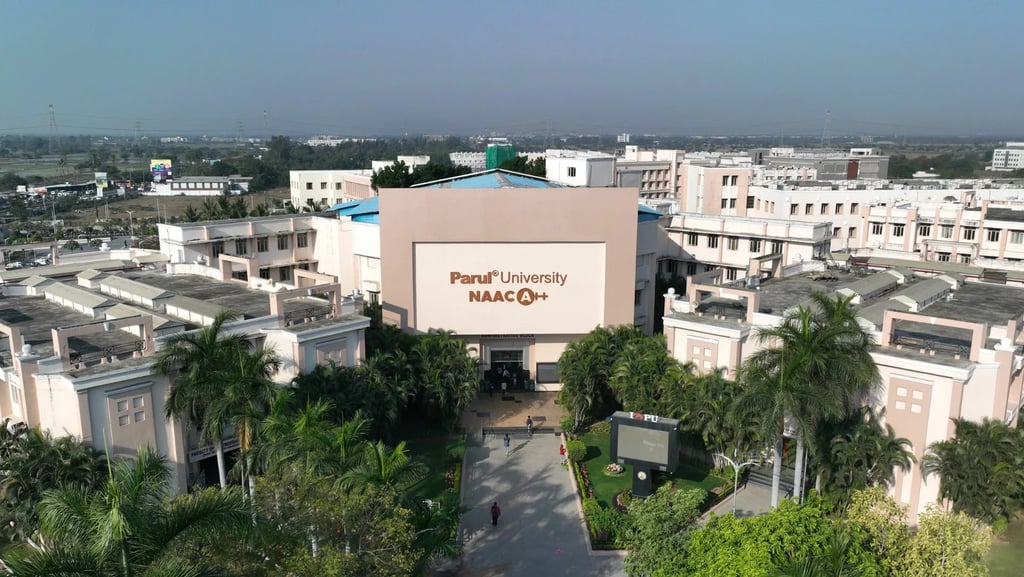
Parul University is a premier private university located in Vadodara, Gujarat, India, with its origins tracing back to 1993. Established as a university in 2015 under the Gujarat Private Universities (Second Amendment) Act of 2009, it has earned the distinction of being India's youngest private university to receive NAAC A++ accreditation in its first assessment cycle. The university is recognised by the University Grants Commission (UGC) as a Category 1 University with Graded Autonomy and holds accreditations from numerous regulatory bodies including AICTE, Bar Council of India, Pharmacy Council of India, National Medical Commission, Indian Nursing Council, and the Ministry of Ayush. The university also holds global memberships in bodies such as the Association of Commonwealth Universities and the Association of Indian Universities. Spread across a 150+ acre eco-friendly campus, the university is home to over 50,000 students from across India and more than 3,500 international students from 75+ countries, offering over 450 programmes across diverse disciplines including Engineering, Management, Pharmacy, Medicine, Law, Design, Architecture, and Health Sciences. Parul University has been ranked among the top 50 universities in India by NIRF Innovation Rankings and secured a position in the 101-150 rank band in the NIRF University Rankings 2024.
Parul Institute of Law, established in 2016, is a constituent unit of Parul University dedicated to imparting comprehensive legal education with a focus on developing critically thinking and analytically empowered legal professionals. Approved by the Bar Council of India and a member of the International Association of Law Schools, New York, the Institute currently caters to students from multiple nations around the world. The Institute offers five-year integrated undergraduate programmes including BA LLB, BBA LLB, and BCom LLB, a three-year LLB (Unitary) course, as well as postgraduate programmes such as LLM with specialisations in Intellectual Property Law, International Law, Public Policy and Governance, Criminal and Security Laws, Environmental Law, and International Human Rights Law, along with M.Phil. and Ph.D. in Law. With modern infrastructure including well-equipped moot court facilities, a library with extensive legal resources, seminar halls, and computer labs, the Institute provides students with both theoretical knowledge and practical legal exposure through regular legal awareness campaigns, participation in Lok Adalats, and collaborations with the District Legal Services Authority.
About the conference host
Parul University
Parul Institute of Law, Vadodara, Gujarat, India


The British Society of Criminology (BSC) stands as a pivotal organisation within the United Kingdom, dedicated to fostering a profound and comprehensive understanding of criminology as a field of study. Established with the aim of promoting criminological scholarship, research, education, and practice, the BSC serves as a vital nexus for academics, practitioners, and students who are engaged in the critical examination of crime, criminal behaviour, and the criminal justice system. Through its activities, the Society seeks to influence public debate and policymaking in the realm of crime and justice, advocating for evidence-based approaches to crime prevention and criminal justice administration. The BSC organizes conferences, seminars, and workshops that provide a forum for the dissemination of new research findings, theoretical developments, and methodological innovations. It also publishes a range of academic resources, including the esteemed journal 'Criminology & Criminal Justice,' which contributes significantly to the field's body of knowledge. By facilitating dialogue and collaboration among its diverse membership, the British Society of Criminology plays a crucial role in shaping the future direction of criminological research and practice in the UK and beyond.
About British Society of Criminology
Critical Criminology Network of British Society of Criminology
The Critical Criminology Network, part of the British Society of Criminology (BSC), is a dynamic collective focusing on critical and radical approaches to understanding crime, harm, and justice. This network serves as a critical forum for scholars, practitioners, and students keen on exploring the deeper socio-political dimensions of criminology, beyond traditional perspectives. It emphasizes the exploration of how crime is socially constructed, the influence of state and corporate power, and the pervasive effects of inequality and systemic bias within criminal justice systems. Open to members at various career stages, the Critical Criminology Network encourages interdisciplinary collaboration and strives to promote social justice and transformative change within the criminal justice system and broader society. Through its activities, it plays a vital role in challenging orthodoxies in criminology and advocating for a more equitable approach to understanding and addressing crime and punishment.


The World Society of Victimology (WSV) is a nonprofit, nongovernmental organisation with Special consultative status with the Economic and Social Council (ECOSOC) of the United Nations and the Council of Europe. It is dedicated to promoting research, education, and advocacy in the field of victimology. Established in 1979, the WSV brings together academics, practitioners, policymakers, and advocates to advance the understanding of victimisation and improve responses to victims of crime and abuse. The organisation collaborates with institutions like the United Nations and other global bodies to influence victim-centered policies and promote human rights. Through conferences, publications, and training programs, the WSV fosters international dialogue and supports the development of victim services and restorative justice practices worldwide. United by a shared concern for victims, its global membership includes victim assistance practitioners, social scientists, social workers, physicians, lawyers, civil servants, volunteers, academics at all levels, and students.
About World Society of Victimology
Contact
Get in touch for inquiries and assistance.
Contact number/whatsApp :
+91 88826 11761
Organising Committee Email: info@icgcv.com
Programme Committee Email: programme@icgcv.com
© 2026. All rights reserved.